













Our
Commitment
Our philosophy is to lead, not to follow
Responsible use of wood and resources
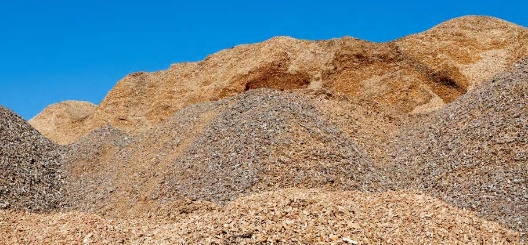
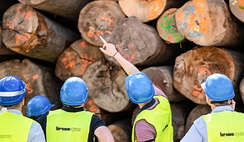
Kronospan uses by-products of other industries as a raw material for its panels, including sawmill residue and recycled wood that might otherwise be burned or discarded. Turning this wood into durable panels keeps it in use longer and reduces the need for freshly harvested timber. Getting as much as possible out of every input is also central to how we run our production. It lowers costs, and it reduces waste. We work on this across our sites and with our suppliers, and we treat it as ongoing work, not a finished result.
In practice, this means:
- Wood sourcing in order of priority. We use recycled wood first, then sawmill residues, and only then small-diameter or oversized roundwood that is less suited to other uses.
- Recycling beyond our own waste. We take in wood residues from other producers and process them into new panels.
- Careful chemical management. We follow defined procedures for handling, storing, using, and disposing of chemicals, in line with applicable regulations.
- Energy from multiple sources. At a number of our sites, part of our energy comes from renewable sources and combined heat and power plants.
- Investment in equipment. We regularly upgrade machinery and processes, considering efficiency and emissions.
- Circular principles. We aim to reduce material use, reuse where possible, and recycle wood that has reached the end of its first life.
- Carbon stored in products. Wood panels hold the carbon trees absorbed during growth for as long as the product is in use.
We know there is more to do. We are committed to improving step by step and to reporting on our progress as we build better ways to measure it.
Our approach to wood and resources
We have worked with timber for more than 100 years. That experience shapes how we use it today: we aim to get as much value as possible from the wood that comes into our plants.
Much of our raw material is wood that has limited other uses: low-grade residues, small and oversized roundwood, and recycled wood. We turn it into engineered wood products.Where we can, we return process residues to production. We use residues we can't reuse this way as fuel for on-site energy generation. For materials we can't use in either way, we look for recycling partners outside the company.
We recycle process waste into our products, or use this to produce carbon-neutral energy for use onsite. When a waste material cannot be used in one of our onsite processes, we seek out recycling opportunities in partnership with other companies.We monitor water and energy use at our sites to find where we can reduce consumption, and we have invested in generating energy on site from wood-based fuels. Reducing waste is a shared responsibility. We ask our employees and the suppliers, contractors, and customers we work with to help us keep it to a minimum.
RESPONSIBLE production
Nature is our most valuable asset
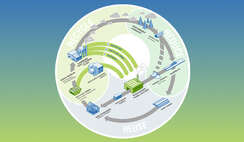
Collect, recycle, reuse: giving wood a second life
Wood-based panels are well suited to circular production because wood that has already served one purpose can be brought back and made into something new. We have set up our production and supply processes to make this possible, and we are working to extend the use of recycled wood across more of our product range.
When sourcing wood, we follow a clear priority order: recycled wood first, sawmill residues second, and wood from sustainably managed forests third.
Before recycled wood enters production, we clean, process, test, and sort it. We use material that isn't suitable for panels as fuel in our biomass combined heat and power plants. These plants provide heat for our production and also generate electricity. This helps us make use of as much of the incoming material as possible.
In production, we dry wood strands at lower temperatures, which helps reduce emissions of volatile organic compounds (VOCs). At the end of their life, our panels can be recycled again, returning to the same cycle they came from.
Putting circularity into practice
Wood is renewable. Wood is reusable. Wood stores CO₂.
Wood is our main raw material, valued for its natural look and its physical qualities. As trees grow, they capture CO₂ from the air, and it remains stored in the wood, including in the boards we make from it. When wood products reach the end of their life, the material can often be recycled into new products or used to generate energy, which extends the value we get from every tree. When forests are managed responsibly, wood can play a meaningful role in more resource-efficient industrial production. At Kronospan, using wood carefully and giving it a second life wherever possible is part of our everyday work. As a building material, wood offers several advantages:
- It stores carbon absorbed during the tree's growth for the lifetime of the product.
- It is renewable when sourced from responsibly managed forests.
- It can be reused and recycled, supporting a more circular use of materials.
- It combines strength with low weight and has natural insulating properties.
Wood is a renewable material with a long life of use and reuse.
Smarter technology, lower impact
We are working step by step to reduce our reliance on fossil fuels across our operations. One of the most visible changes is on the factory floor, where we are gradually replacing diesel forklifts with electric ones.
Where the rail network allows, we are also shifting freight from road to rail. This means regularly reviewing how we organize our routes, workflows, and logistics network. In production, we keep investing in newer technology and refining our processes so that our machinery and facilities use energy more efficiently and produce less waste.
At a number of our sites, part of the electricity we use comes from our own solar, wind and combined heat and power installations, and we continue to invest in new, more efficient equipment.
We will keep investing in smarter, more circular ways of working
PEOPLE & RESPONSIBILITY
Built on experience
Kronospan has been shaping the wood-based panel industry for decades

As a growing business in a fast-changing market, we know our people are the key to our success.

2020
Introduction of E05 compliance standard according to EN 717-1.

2019
Introduction of safety compliance standard.

2015
We are committed to protecting the environment, and labelling our low emission products with the extra low emission E-LE butterfly emblem shows this.

2009
First OSB to receive certification from Energieinstitut Vorarlberg as an environmentally friendly product due to low VOC emissions and formaldehyde-free production technology.

2007
OSB ECO with extra low volatile organic compound (VOC) emissions.

1989
First factory in Central and East Europe to produce E1 particleboard.

1988
First tannin bonded MDF to meet E0 standard.

1985
100% of production was turned into E1 standard quality.
All Kronospan wood-based panels meet the European E1* emission class, which limits formaldehyde emissions. To unify and standardize our production processes, we also developed our own E-LE label for extra low emission products, introduced in 2015.
In 2019, we certified our products to TSCA Title VI** to meet the requirements of the US market. In 2020, we introduced boards that comply with the German E1E05 limit, based on the DIN EN 16516 test method under the German Chemicals Prohibition Ordinance (ChemVerbotsV)***. It sets stricter formaldehyde limits for coated and uncoated wood-based materials.
* E1 is the European emission class that sets the maximum formaldehyde emission allowed for wood-based panels.
** TSCA Title VI is the US federal regulation on formaldehyde emissions from composite wood products.
*** ChemVerbotsV is the German Chemicals Prohibition Ordinance, which sets formaldehyde limits for woodbased materials.
RESPONSIBLE FORESTRY & CERTIFICATION
Reducing our environmental impact
Our aim is to put as much of our raw material to use as possible.
Wood follows the principle of cascading use: first in products, then recycled where possible, and only then used for energy.
We regularly review how much raw material, energy and water our processes use, and look for ways to use less.
Reducing the carbon footprint of our operations is an ongoing focus.
We require our suppliers not to use wood from national parks, nature reserves, virgin forests or other conservation areas.
Sustainability Reports
Our steps, documented
Country selection